

What to Expect at Envision Pelvic Health & Wellness
New to Pelvic Floor Physical Therapy?
Maybe your physician recommended pelvic floor physical therapy, but you’re not quite sure what it is. Or you found us while looking for help with symptoms you’ve been dealing with for a while.
You might be wondering, “Is this the right place for me?” And just as importantly, “What actually happens at an appointment?”
We want you to feel comfortable before you walk through our door. Here’s a look at who we are, how pelvic PT can help, and what to expect when you come to Envision Pelvic Health & Wellness.
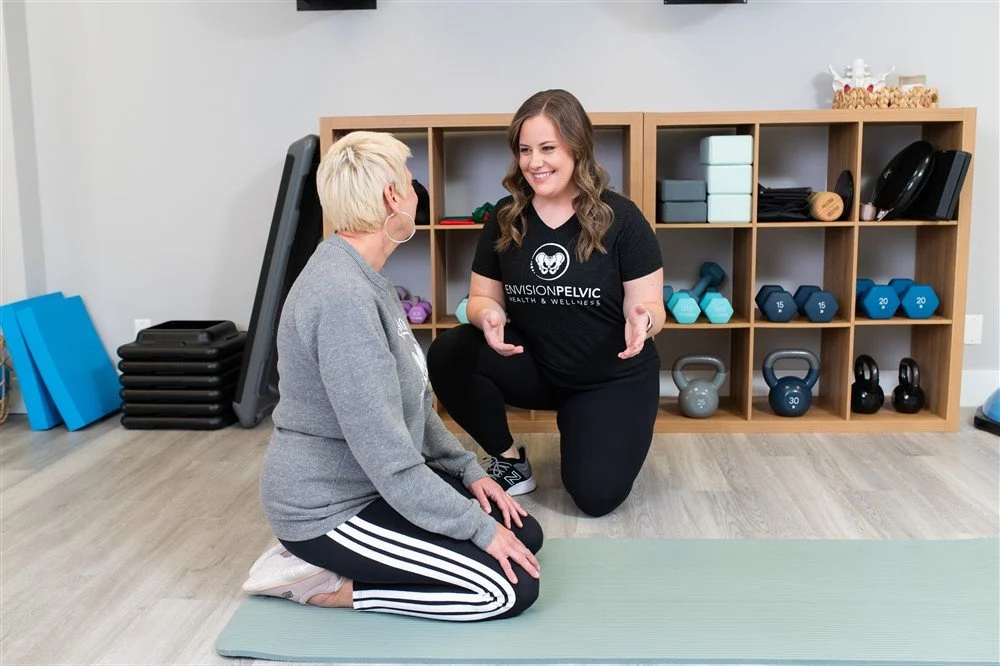
What Is Pelvic Floor Physical Therapy?
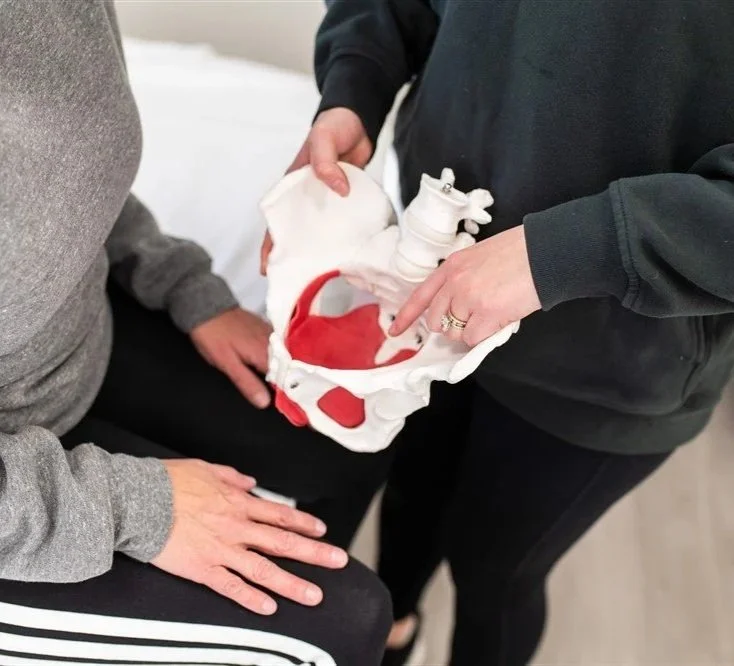
Your pelvic floor is a group of muscles at the bottom of your pelvis. These muscles help support your pelvic organs and play a role in bladder control, bowel movements, sexual function, and movement.
Like other muscles in your body, they can become weak, tense, painful, or have trouble coordinating. Sometimes they need strengthening. Sometimes they need help relaxing. Sometimes we need to work on both.
Pelvic floor physical therapy helps us understand how these muscles are working and what may be contributing to your symptoms.
How Do I Know if Pelvic PT Could Help Me?

People come to us for many different reasons. Some have a diagnosis from their physician. Others just know something doesn’t feel right.
You may benefit from an evaluation if you’re experiencing:
Leaking with coughing, sneezing, laughing, or exercise.
Frequent bathroom trips, strong urinary urges, or difficulty emptying.
Constipation, straining, or trouble finishing a bowel movement.
Pelvic, tailbone, hip, groin, or lower back pain.
Pain with sex, vaginal insertion, or pelvic exams.
Pelvic pressure, heaviness, or a bulging sensation.
Pain or difficulty moving during pregnancy.
Concerns about recovery after childbirth or a C-section.
Symptoms following pelvic or prostate surgery.
We also help people prepare for birth, return to exercise, and address movement or pain concerns alongside fertility care.
You don’t need to diagnose yourself before reaching out. Tell us what you’re experiencing, and we can help you understand whether an evaluation is a good next step.
What Happens at My First Pelvic PT Appointment?
Your first appointment is a 60-minute evaluation. You’ll be in a private treatment room with a doctor of physical therapy.
First, We Talk
We start with your story.
What brought you in? When did your symptoms begin? What makes them better or worse? What would you like to get back to doing?
Depending on your concerns, we may ask about your bladder and bowel habits, pain, sexual health, pregnancies, surgeries, and medical history.
We know some of these questions are personal. We’ll explain how they relate to your care, and you can let us know if you need a pause or aren’t ready to discuss something.
Next, We Assess How Your Body Is Working
Your evaluation is based on your symptoms. We may look at:
How you breathe and manage pressure during movement.
Your rib, back, hip, foot & ankle mobility.
Your strength, balance, and coordination.
Your abdominal muscles and any relevant scars.
How your pelvic floor muscles contract and relax.
We’ll explain what we’re doing before we do it. You can ask questions throughout the appointment.
Then, We Make a Plan Together
We’ll talk through what we found, how it may relate to your symptoms, and what we recommend.
You’ll have time to ask questions about treatment, appointment frequency, and what you can do between visits. When appropriate, we may begin treatment during your evaluation.
You won’t need to remember everything or change your whole routine overnight. We’ll help you choose manageable starting points, and you’ll leave with handouts that summarize what we covered.
Will There Be an Internal Pelvic Exam?
-
If we recommend an internal assessment, we’ll explain why and describe each step before asking for your consent.
It typically involves a gloved, lubricated finger to assess the muscles. It is different from a gynecologic exam and does not use a speculum.
You’ll have privacy to change and will be covered appropriately during the assessment.
-
Absolutely. You can decline any part of an assessment or treatment. You can also change your mind after we’ve started.
Agreeing to something at one appointment doesn’t mean you have to agree to it at the next. We’ll continue checking in with you.
-
Yes. We can assess and treat many concerns through movement, external assessment, education, and other approaches.
We’ll explain what we can learn from each option and work with your preferences.
-
Our goal is to keep assessment and treatment within your comfort level. Some areas may be sensitive, especially if you already have pain.
Tell us what you’re feeling. You do not need to push through pain, and we can adjust or stop at any time.
What Does Pelvic Floor Physical Therapy Treatment Look Like?
Your treatment will depend on what we find and what you want to accomplish.
It may include:
Hands-on treatment for sensitive muscles, restricted movement, or scars.
Exercises to improve strength, mobility, and coordination.
Strategies to help your pelvic floor relax.
Bladder and bowel habit education.
Breathing and pressure management during lifting or exercise.
Gradual practice with activities that have become painful or difficult.
Pregnancy, birth preparation, or postpartum recovery education.
We’ll explain the purpose of each part of your treatment so you understand how it connects to your goals.
-
Usually, you’ll have a few things to practice between appointments. These might be exercises, a relaxation strategy, or a change to a daily habit.
We know you have a life outside of PT. Let us know what feels realistic so we can build a plan you can follow.
-
There isn’t one schedule that works for everyone. Your therapist will recommend a starting frequency based on your symptoms, goals, and evaluation. However, the majority of our patients come once a week at the start of their plan of care.
We’ll reassess as you go and adjust your plan based on your progress. If we think you need additional medical evaluation or another type of care, we’ll discuss that with you.
How Should I Prepare for My First Appointment?

-
Please complete your intake forms before your visit. This helps your therapist review your history and leaves more time for your appointment.
Include your referring provider’s information and any other clinicians you’d like us to coordinate with.
-
Wear comfortable clothing you can move in, such as a T-shirt and leggings, shorts, or loose pants.
Have your medication list and any relevant referral or medical information available. You’re also welcome to write down questions ahead of time.
There’s no need to shave, wax, or change your grooming routine.
-
Yes. Your period doesn’t prevent you from attending pelvic PT.
If an internal assessment or treatment is being considered, we’ll talk about your comfort and preferences. We can also focus on other parts of your care.
-
Yes. Babies and children are welcome at Envision.
If you have questions about bringing them or managing feeding during your visit, reach out so we can help you plan.
Referrals, Insurance & Coordinating Your Care
-
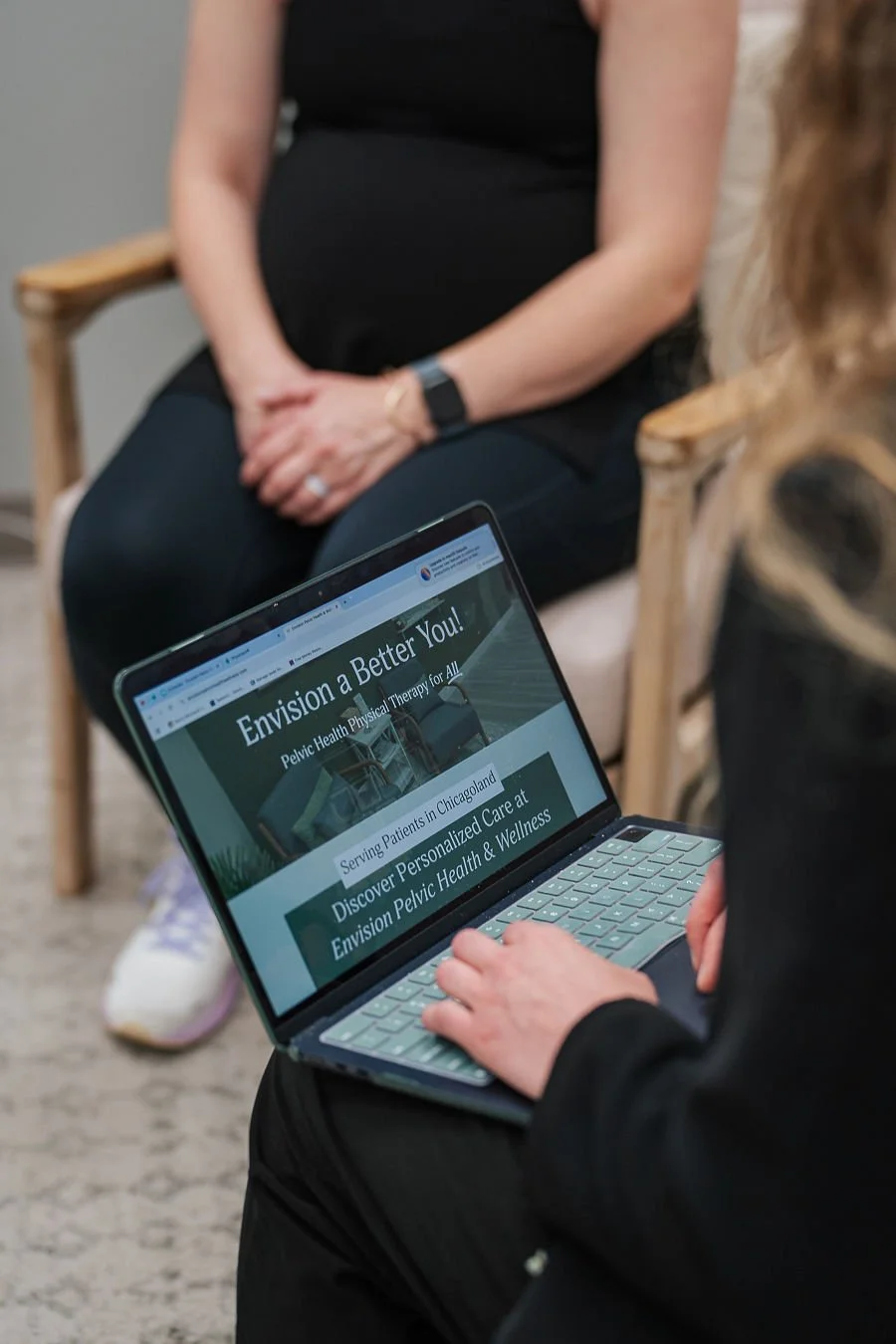
If your physician referred you, please share that information when you schedule.
If you found us on your own, you can contact us to get started. We’ll help clarify any referral requirements that apply to your care. Your insurance plan may also have its own requirements for out-of-network reimbursement.
-
Yes. With your permission, we can share evaluation findings, progress updates, and recommendations with your physician or other healthcare providers.
If something needs further medical evaluation, we’ll explain our concerns and help coordinate next steps.
You can also let us know if you’re seeing another physical therapist or specialist. We want your care to work together.
Does Envision Pelvic Accept My Insurance?
Envision Pelvic Health & Wellness is out-of-network with all insurance plans.
We want you to understand the financial side of care before you begin. You can learn more about our payment and reimbursement here.
How Payment Works
We aim to make the process simple and clear from the start.
Schedule your appointment:
You can schedule your visit online or by contacting our clinic. For online bookings, a $50 deposit is required to reserve your appointment time.
Your deposit goes toward your session. The $50 deposit is not an additional fee. It is applied toward the total cost of your visit.
Payment at the time of service:
We accept major credit cards as well as HSA and FSA funds for eligible services.
We provide you with a receipt, known as a superbill, to submit to your insurance for potential reimbursement.
Pricing:
Initial Assessment: $250
Follow-up sessions: $225
-
We accept HSA and FSA payments for pelvic physical therapy. Check with your account administrator if you have questions about documentation or eligibility.
-
We can provide a superbill, which is an itemized receipt you can submit to your insurance company for possible out-of-network reimbursement.
Having insurance does not automatically mean your plan will reimburse these visits. Coverage, deductibles, and reimbursement amounts depend on your plan.
Our Location
Envision Pelvic Health & Wellness is located in Northwest Chicago, IL, in the Norwood Park neighborhood, conveniently situated near Park Ridge, IL. Our clinic serves patients throughout Chicago and the surrounding northwest suburbs who are seeking specialized pelvic floor physical therapy.
We are:
Less than 1 mile from the Harlem Blue Line stop
Less than 1 mile from the Norwood Park Metra stop
Easily accessible from I-294 (Tri-State Tollway) and I-90 (Kennedy / Jane Addams Expressway)
Located in an easy-access building
Surrounded by ample free parking
Whether you’re coming from the city or nearby suburbs, our location makes it easy to fit pelvic physical therapy into your schedule.
How Do I Schedule My First Pelvic PT Visit?
You can book an evaluation online or contact our team for help finding a time.
If you’re unsure whether we’re the right fit, reach out and tell us a little about what’s going on. You don’t need the right terminology or a confirmed diagnosis to start the conversation.
We’d love to help you understand your symptoms and feel more confident about your next step