
Dry Needling
Do you have a tight spot that just won’t go away?
You’ve tried stretching, foam rolling, massage… but it keeps coming back.
You might notice:Waking up with neck stiffness or difficulty turning your head
Deep glute pain that won’t budge
A “knot” that never fully releases
Dry needling may be the missing piece in your recovery.
What is Dry Needling?
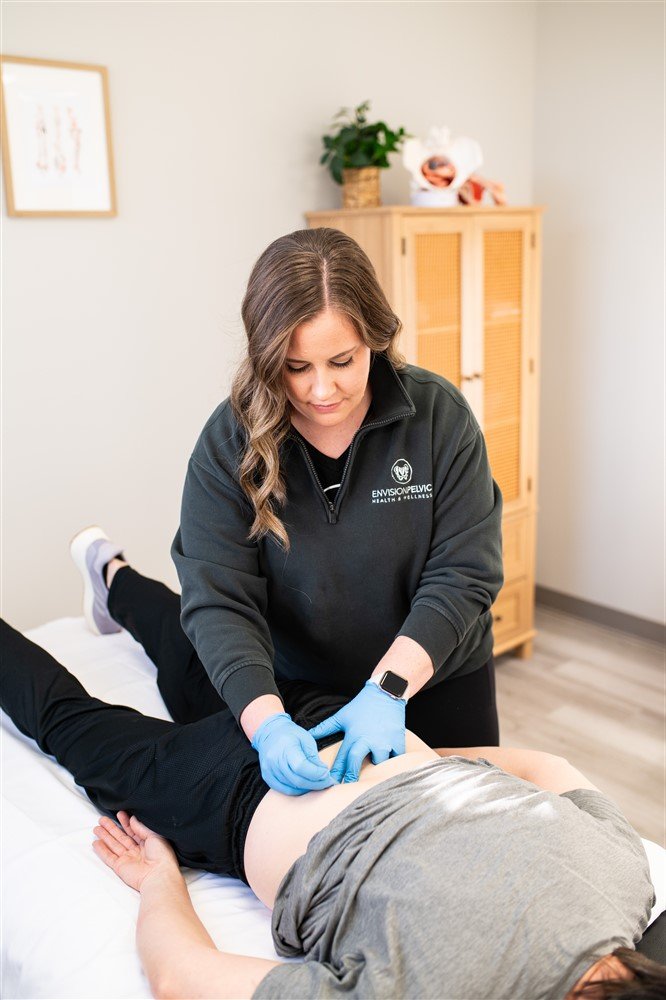
Dry needling is a skilled, evidence-based technique used by specially trained physical therapists to treat muscle tension, pain, and movement restrictions.
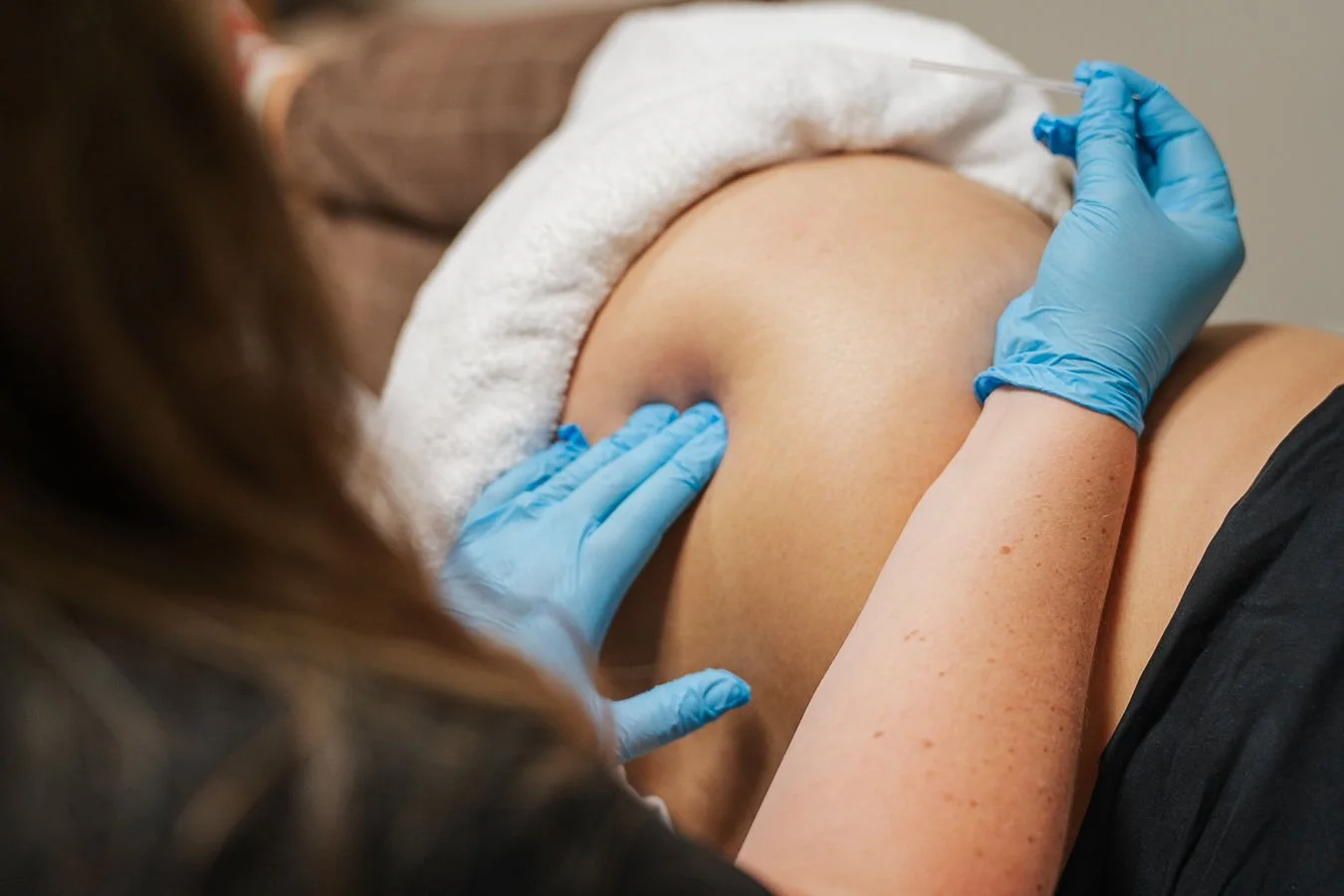
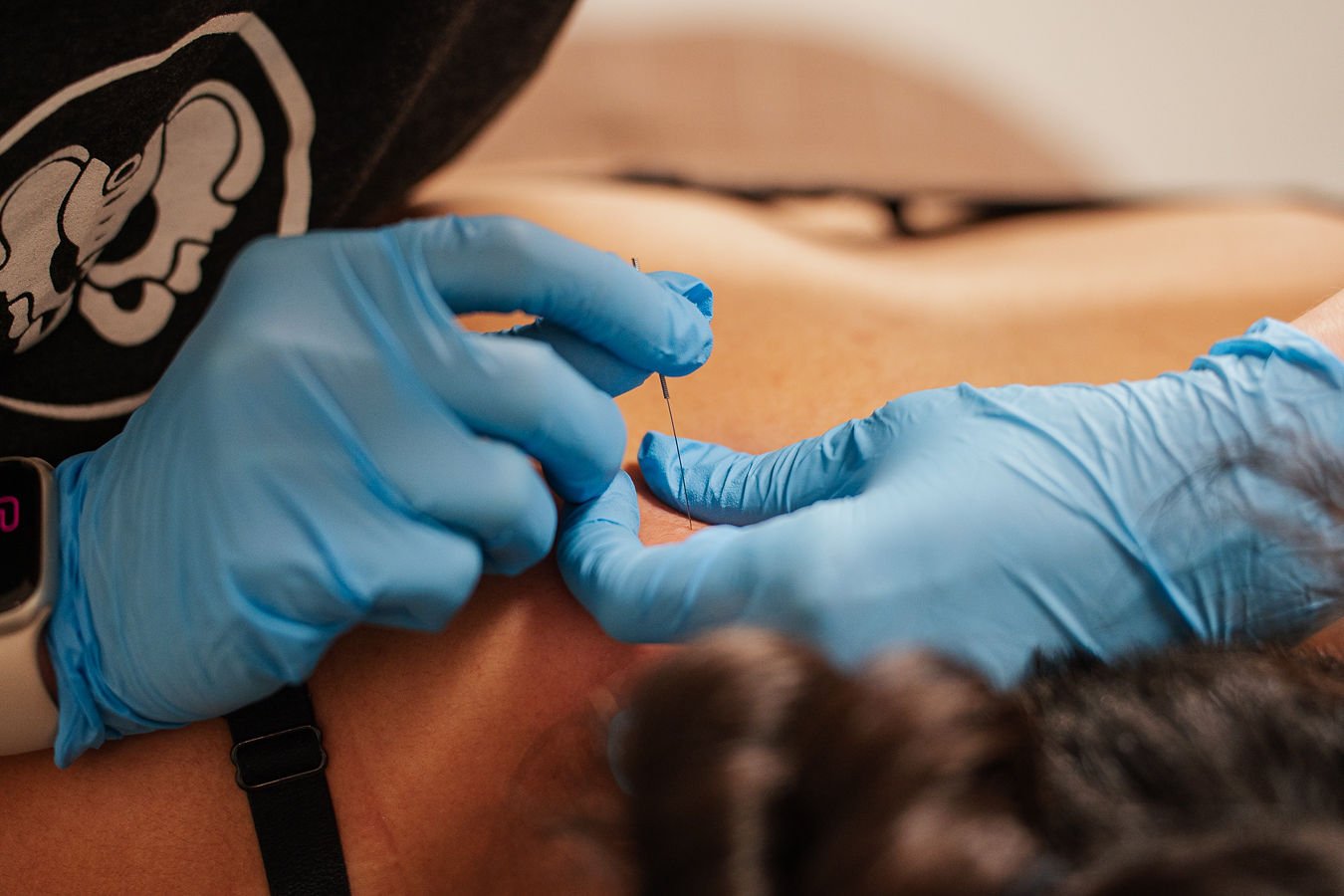
It involves the use of a very thin, sterile needle that is inserted into tight or irritated muscle tissue (often called “trigger points”) to help the muscle relax and function more normally.
Dry needling is designed to:
Reduce muscle tension
Improve blood flow
Decrease pain
Restore normal movement
Many patients describe it as helping muscles “release” in a way that other techniques sometimes cannot.
What Dry Needling Is Not
Dry needling is often confused with acupuncture, but they are not the same.
It is not based in traditional Chinese medicine
It is not used to balance energy or meridians
It is a modern, Western medicine technique rooted in anatomy and neuromuscular science
Dry needling is also:
Not an injection (nothing is injected into the body)
Not a standalone treatment
At Envision, it is always part of a comprehensive, whole-body plan of care.
What Is the Purpose of Dry Needling?
The goal of dry needling is to help reset how muscles and the nervous system are functioning.
When muscles are tight, overactive, or not coordinating well, they can contribute to:
Pain
Limited mobility
Poor muscle activation
Ongoing dysfunction
Dry needling helps:
Calm down overactive muscles
Improve muscle coordination
Reduce protective guarding patterns
Create an opportunity for more effective movement and strengthening
This allows us to make faster and more meaningful progress in your care.
How We Use Dry Needling in Pelvic Floor Physical Therapy
In pelvic floor physical therapy, we look at the body as a connected system.
Pelvic floor symptoms are often influenced by surrounding areas like the:
Hips
Abdomen
Low back
Glutes
Inner thighs
Dry needling can be used to address muscle tension and dysfunction in these areas to support pelvic floor function.
We may incorporate dry needling as part of your plan of care if you are experiencing:
Pelvic pain
Pain with sitting or activity
Hip or low back pain
Pregnancy or postpartum-related muscle tension
Abdominal or scar-related restrictions
Difficulty relaxing or coordinating the pelvic floor
By improving how the surrounding muscles function, we can better support your pelvic floor and overall movement.
What to Expect
You may feel:
A small pinch with insertion
A brief muscle twitch or cramp sensation
A feeling of release or deep ache
After treatment, it is normal to feel:
Mild soreness (similar to a workout)
Improved mobility or decreased tension
Your therapist will always explain the process, answer your questions, and ensure you feel comfortable before proceeding.
Learn more about what dry needling feels like and what to expect on our blog.
Our Training & Approach
All physical therapists at Envision Pelvic Health & Wellness are trained in dry needling and use it thoughtfully as part of your individualized care plan.
We do not use a one-size-fits-all approach. Instead, we integrate dry needling with:
Hands-on manual therapy
Movement and mobility work
Breath work
Nervous system regulation
Strength and coordination training
This allows us to treat the root cause of your symptoms—not just the surface.
Is Dry Needling Right for You?
Dry needling is not required for progress, but it can be a powerful tool when appropriate.
If you’re unsure whether it’s a good fit, we’re happy to talk through your goals and create a plan that feels right for you.