
What Is Bladder Leakage a Sign Of?

What Bladder Leakage Really Means
I think it’s important to know that while bladder leakage is often common, it’s not normal. I frequently hear women at the playground with their kids or out to dinner with their friends say, “Ever since I had my baby, I have to wear a pad all the time,” or “My grandma, mom, and aunt all had to wear pads after having kids, so I will too.”
In society, we have normalized wearing pads and accepted urinary leakage as expected because of having children or simply as we age.
Let’s first start by breaking down the different types of bladder leakage, because not all leakage is the same.
Stress urinary incontinence is when urine is lost due to a sudden increase in pressure, often from a sneeze, cough, laugh, exercise, or movement.
Urge urinary incontinence is when you leak urine after feeling a sudden urge to pee and are usually on your way to the nearest restroom.
Mixed urinary incontinence is when a person experiences both stress and urge urinary incontinence.
Coital urinary incontinence is when bladder leakage occurs during or after intercourse, with or without penetration.
Now that I’ve told you that you don’t have to live with bladder leakage, let’s learn more about what bladder leakage is a sign of so we can get you on the path toward improved bladder control.
What Is Bladder Leakage a Sign Of?
Bladder leakage doesn’t happen without a reason. While it’s often brushed off as “normal,” leaking urine is your body’s way of signaling that something in your system needs support. The causes can vary from muscle coordination issues to hormonal changes or increased pressure on the pelvic floor.
Bladder leakage may be a sign of:
Pelvic floor muscle weakness
Pelvic floor muscle tightness (overactivity)
Hormonal changes
Postpartum recovery
Perimenopause or menopause
Overactive bladder
Post-pelvic surgery
Pelvic organ prolapse
Core and pressure management issues
UTIs or inflammation
Certain medications or lifestyle factors
Neurological conditions
One of the Most Common Causes: Pelvic Floor Dysfunction
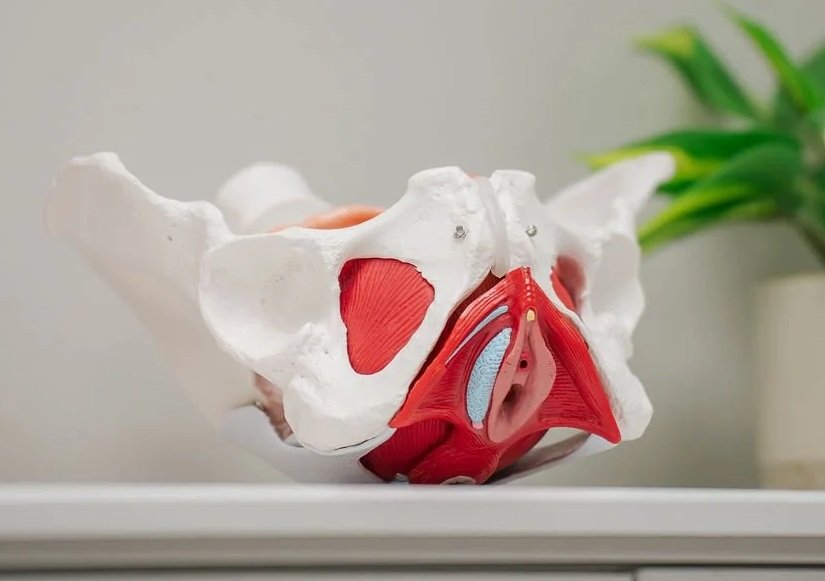
As a pelvic health physical therapist, one of the most common reasons I find patients experience bladder leakage comes from the pelvic floor muscles themselves. Pelvic floor muscles can be weak, tight, or most often a combination of both.
Let’s dive into these two scenarios a little more:
Pelvic floor muscle weakness
The pelvic floor is responsible for supporting your pelvic organs, including your bladder, uterus, ovaries, and urethra (where urine exits the body). These muscles play a crucial role in keeping urine and stool in when we aren’t ready to go.
For bladder control, the muscles surrounding the urethra need adequate strength, endurance (the ability to hold a contraction for a period), and coordination to maintain continence.
Pelvic floor muscle tightness
If the pelvic floor muscles are too tight and unable to relax, they can’t contract or engage effectively to maintain bladder control. One thing I always educate my patients on is this: a tight pelvic floor muscle is a weak pelvic floor muscle.
For optimal bladder control, the pelvic floor needs to be strong, able to lengthen, lift, and engage when needed. If any of these components are impaired, overall coordination of the pelvic floor is compromised, and bladder leakage can occur.
What Should Happen When You Sneeze, Cough, or Laugh
Pressure builds inside the core canister (diaphragm, abdominals, pelvic floor)
Your body senses this pressure increase
The pelvic floor automatically lifts and engages
The pelvic floor creates a squeeze around the urethra
This support helps maintain bladder control and protect pelvic organs
When urinary leakage can occur:
Pelvic floor muscles are too weak to create an effective squeeze
Pelvic floor muscles have low endurance and can’t maintain the squeeze long enough
The urethra isn’t supported in time to counter the pressure
Is Bladder Leakage Ever a Sign of Something More Serious?
There are times when bladder leakage can be a sign of something more serious, including:
Urinary tract infections (UTIs)
Neurological conditions
Red flags to be aware of include:
Blood in the urine
New or severe urgency
Fever
Sudden and complete loss of bladder and bowel control
If you experience any of these symptoms, it’s important to seek medical care.
Effective Treatment Options for Bladder Leakage
Pelvic floor physical therapy offers a non-invasive, conservative option to improve bladder leakage. As pelvic health physical therapists, we provide support through:
Identifying the underlying cause of your bladder leakage
Breath and pressure management retraining
Bladder retraining and urge suppression strategies
Manual therapy for pelvic floor tension
Strengthening and coordination exercises
Lifestyle and hydration guidance
In some cases, adjunctive treatment options may also be appropriate:
Pessary: A removable plastic or silicone device placed in the vaginal canal to support pelvic organs and improve urethral support.
Medications: Prescribed by a medical provider if leakage is related to bladder urgency or neurological conditions.
Botox injections: Used to improve urethral support; while helpful short-term, this does not address the root cause and often requires repeated treatments.
Surgery: May be indicated in cases of advanced pelvic organ prolapse that cannot be managed conservatively with a pessary and pelvic health physical therapy.
In Conclusion
Bladder leakage is a sign that the pelvic floor, core, and breathing system aren’t working together effectively to maintain bladder control. It may be related to pelvic floor muscle weakness, pelvic muscle tightness, hormonal changes, postpartum or surgical recovery, or poor coordination affecting pressure management.
While bladder leakage is common, it’s not normal, and it’s not something you have to live with. Pelvic floor physical therapy offers a conservative, effective option to improve urinary leakage and restore confidence. As pelvic floor specialists, we would love to help you identify the root cause of your symptoms, create a customized plan, and help you feel more confident in your body.
Work With Us
We would love to help you find the root cause of your bladder leakage and create a customized treatment plan to get you on the path to improved bladder control.
If you’re local to Northwest Chicago, we are a pelvic health physical therapy clinic located in the Norwood Park neighborhood of Chicago, near Park Ridge, IL, and would be honored to support you.
If you have questions or would like us to give you a call, book a discovery call or submit a contact form today.
Want to take control of your bladder leakage?
Sign up for our free Pelvic PT Guide to Understanding & Improving Bladder Leakage